Balancing shift work at a Peninsula medical center, managing a classroom in a local school district, or coordinating corporate health protocols leaves very little room for all-day training seminars. For professionals based in San Mateo, California, American Heart Association Self-Guided Learning delivers a structured alternative to standard full-day lectures. This hybrid format splits certification into two distinct phases: web-based theoretical instruction completed on your own schedule, followed by an in-person physical skills evaluation. Whether your supervisor requires Basic Life Support (BLS), Advanced Cardiovascular Life Support (ACLS), Pediatric Advanced Life Support (PALS), or Heartsaver CPR and First Aid, this pathway allows you to satisfy official standards without disrupting your entire work week.
Key Takeaway: AHA Self-Guided Learning combines online cognitive study with an in-person practical skills evaluation, providing a flexible certification path for San Mateo workers. Because training mandates differ between hospitals, educational institutions, and licensing boards, learners should confirm their specific course level prior to enrolling.
What Is AHA Self-Guided Learning and How Does It Function?
American Heart Association Self-Guided Learning—often titled HeartCode® for clinical disciplines—replaces traditional, multi-hour classroom lectures with dynamic, web-based modules.
Instead of sitting through group presentation slides, participants complete adaptive learning units on a computer, tablet, or smartphone. This setup lets you master critical resuscitation guidelines while controlling when and where you study.
- Independent Cognitive Study: Students work through core resuscitation science, analyze interactive patient scenarios, and complete decision-based assessments online.
- Flexible Mastery: You can pause, review, or replay challenging material—such as adult cardiac arrest protocols, pediatric ventilation ratios, or stroke algorithms—until you feel confident.
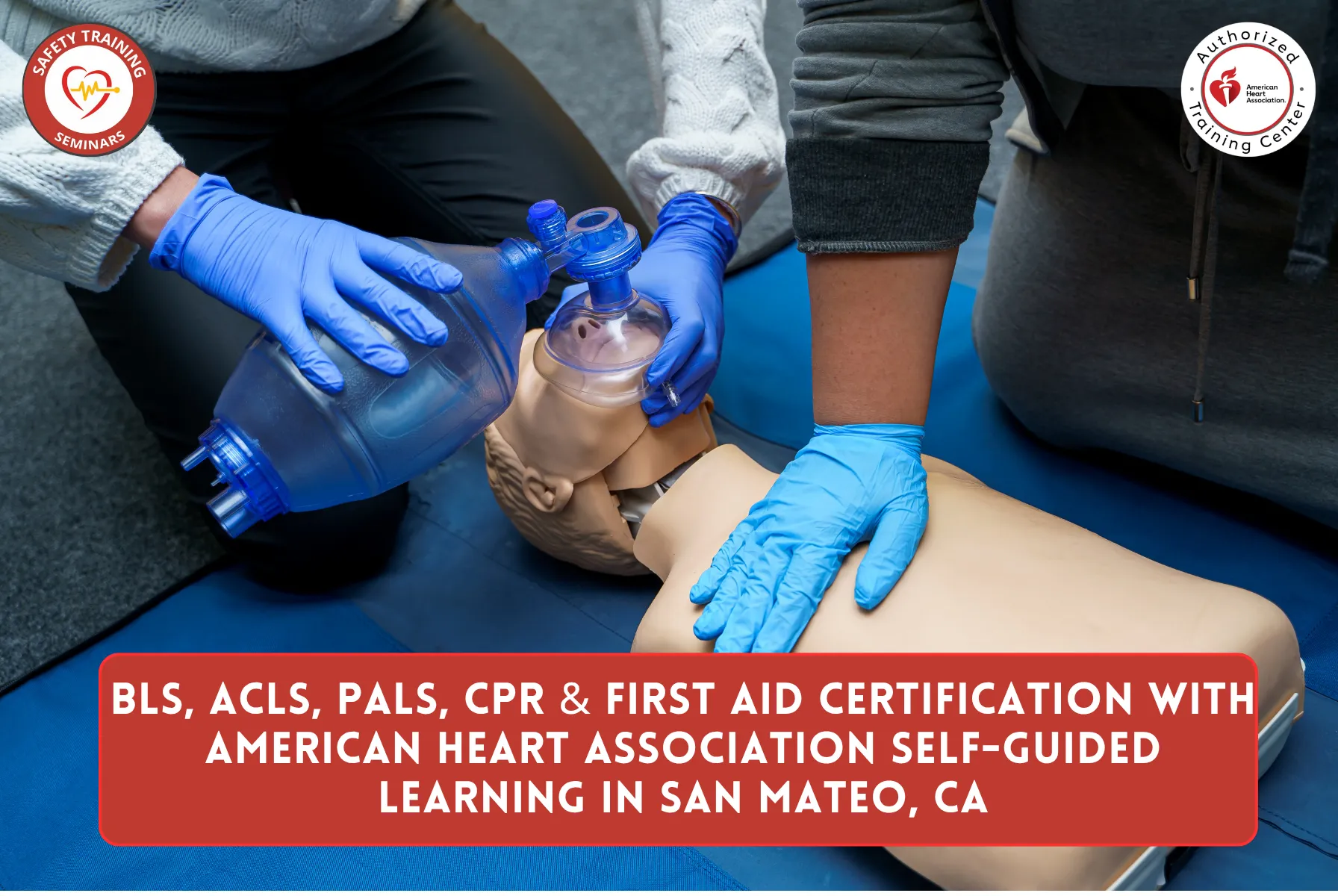
- In-Person Skill Verification: After finishing the web portion, candidates attend a hands-on session to demonstrate physical chest compressions, bag-valve-mask ventilations, AED operation, or advanced airway management using specialized equipment.
- Official Credentials: Learners who successfully demonstrate physical competency receive an authentic AHA course completion eCard.
This hybrid model differs fundamentally from unaccredited, online-only websites. The American Heart Association mandates an in-person evaluation because physical compression depth, recoil rate, and proper mask seals cannot be verified through a computer screen alone.
Available AHA Self-Guided Courses in San Mateo
Blended learning formats cover multiple safety levels, matching the specific responsibilities of clinical personnel, school staff, and corporate teams.
Basic Life Support (BLS)
BLS serves as the foundational resuscitation standard for clinical providers and pre-hospital emergency personnel. The curriculum focuses on high-quality single- and multi-rescuer adult, child, and infant CPR, bag-valve-mask (BVM) ventilation techniques, relief of foreign-body airway obstructions, and automated external defibrillator (AED) operation.
- Who Typically Needs It: Registered nurses, physical therapists, dental hygienists, emergency medical technicians (EMTs), medical assistants, radiologic technologists, and nursing students.
- Self-Guided Advantage: Healthcare workers review resuscitation theory around their clinical shifts, significantly reducing on-site attendance time when scheduling BLS classes in San Mateo.
Advanced Cardiovascular Life Support (ACLS)
ACLS builds directly upon foundational BLS knowledge, tailoring its scope to advanced adult cardiovascular emergencies. Training emphasizes cardiac arrest management, peri-arrest conditions, acute coronary syndromes, acute ischemic stroke, electrical therapies, emergency pharmacology, and effective team dynamics during resuscitation.
- Who Typically Needs It: Emergency room physicians, intensive care nurses, paramedics, telemetry specialists, surgical technicians, and cardiac catheterization teams.
- Self-Guided Advantage: Clinicians study complex dysrhythmias and drug protocols independently, reserving their in-person session for team leadership scenarios and physical skill validation.
Pediatric Advanced Life Support (PALS)
PALS concentrates on emergency care for infant and pediatric patients. Coursework covers systematic pediatric assessment, respiratory distress and failure management, shock protocols, pediatric cardiac dysrhythmias, and multi-disciplinary communication during pediatric resuscitation.
- Who Typically Needs It: Pediatricians, pediatric nurses, emergency department staff, pediatric dental professionals, and transport paramedics.
- Self-Guided Advantage: Healthcare personnel can review age-specific physiological variables and dosage calculations at home before completing their hands-on skills testing. You can review available session times through local ACLS and PALS training options on the Peninsula.
Heartsaver CPR, AED, and First Aid
Heartsaver programs provide clear life safety instruction for non-clinical personnel who need verified workplace compliance. Content covers adult, child, and infant CPR, AED deployment, choking clearance, severe bleeding control, burn care, and first aid responses for sudden illnesses.
- Who Typically Needs It: Elementary and high school teachers, daycare personnel, youth athletic coaches, fitness trainers, construction supervisors, office safety coordinators, and family caregivers.
- Self-Guided Advantage: Non-healthcare staff learn first aid protocols online during their free time, keeping their practical skills appointment brief and focused.
Selecting the Right Course Level
Choosing the correct certification prevents onboarding delays or academic registration issues. Use this breakdown to align your training choice with your organizational role.
| Course Level | Primary Target Audience | Core Skills Assessed |
| BLS | Nurses, doctors, EMTs, dental staff, clinical trainees | Team CPR, BVM ventilations, AED usage, infant/child rescue |
| ACLS | ICU/ER clinicians, paramedics, telemetry staff | ECG interpretation, cardiac drugs, advanced airways, code management |
| PALS | Pediatric nurses, pediatricians, pediatric ER staff | Pediatric assessment triangle, pediatric shock, pediatric dysrhythmias |
| Heartsaver CPR/AED | Teachers, daycare workers, coaches, corporate staff | Adult/child/infant CPR, AED operation, choking relief |
| Heartsaver First Aid | Industrial leads, office safety wardens, caregivers | Hemorrhage control, burn management, environmental injuries, sudden illness |
Note: Requirements vary between employers, academic programs, and licensing boards. Always verify your organization’s exact expectations before enrolling in a course.
Comparing Formats: Self-Guided vs. Traditional vs. Online-Only
Understanding the operational differences between course formats ensures your final credential will be accepted by your employer or licensing authority.
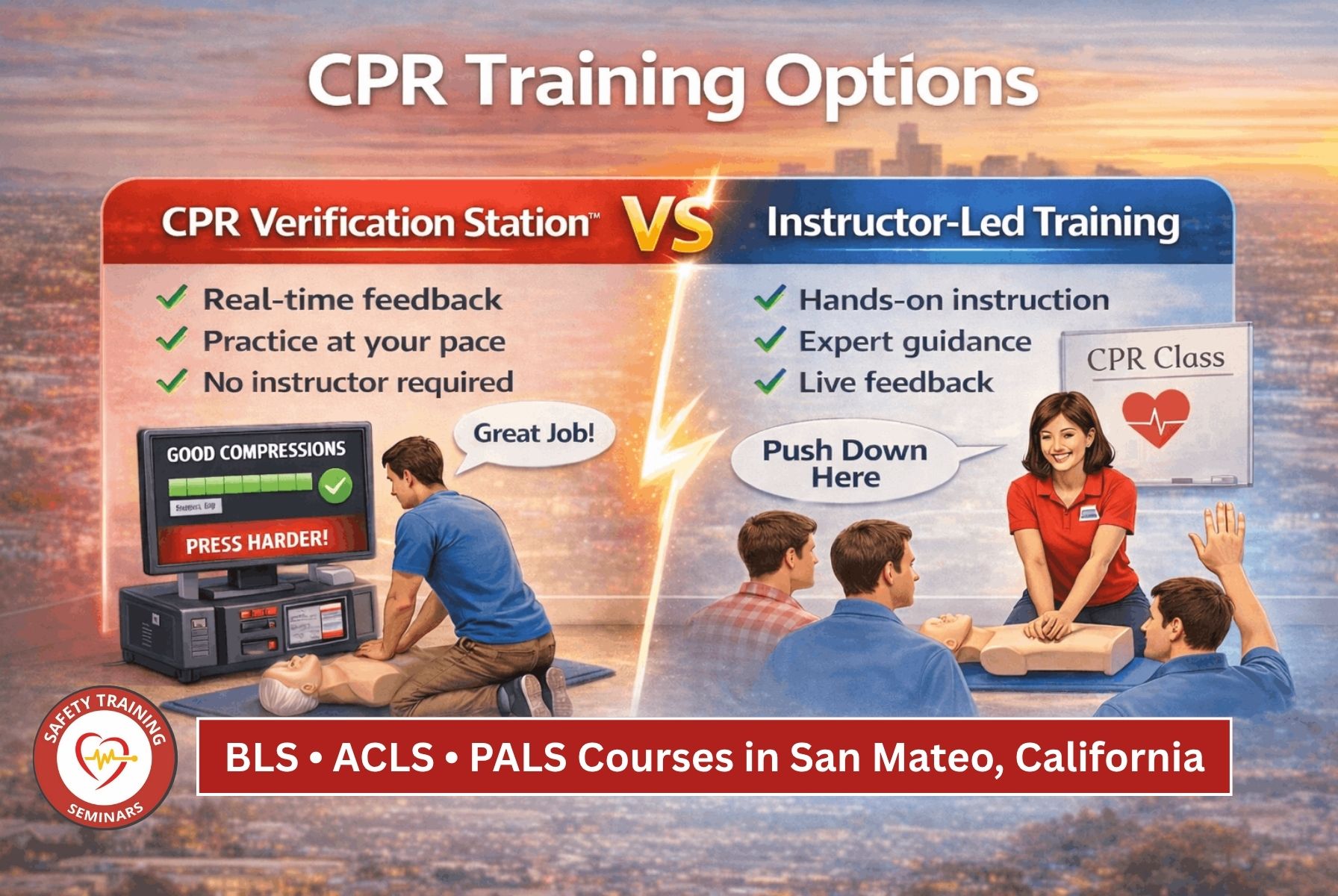
- AHA Self-Guided (Blended) Learning: Combines self-paced online modules with a mandatory, hands-on physical skills assessment. This option satisfies requirements from OSHA, healthcare systems, and educational accrediting bodies because physical mechanics—such as compression depth, hand placement, and ventilation seals—are directly evaluated.
- Traditional Classroom Instruction: Requires attending a scheduled, instructor-led group session at a physical location. This format suits individuals who prefer face-to-face lecture environments and immediate, continuous instructor feedback throughout the course.
- Unaccredited “Online-Only” Programs: Numerous websites offer instant certificates based purely on reading digital pages or taking online quizzes without physical skills testing. Caution: Healthcare organizations, school districts, and state licensing boards across California routinely reject online-only cards because physical performance is never verified.
Local Training Context in San Mateo
Navigating busy commute routes along Highway 101, El Camino Real, and Interstate 280 makes scheduled classroom commitments challenging for Peninsula residents. Healthcare providers working near local medical centers, allied health students attending nearby vocational programs, and educators in San Mateo Union High School District or local elementary districts need flexible learning arrangements.
In addition, workplace safety managers in office parks near Foster City, childcare workers in Burlingame, and fitness instructors operating along the Peninsula benefit from self-paced study. AHA Self-Guided Learning allows individuals across San Mateo, Belmont, San Carlos, and Millbrae to complete the cognitive portion of their training at home or work, leaving only a brief, appointment-based skills evaluation at a nearby center.
Completing Your Skills Session with Safety Training Seminars
For learners who need an authorized testing facility to complete their practical assessment, Safety Training Seminars provides organized AHA skills evaluation appointments.
Safety Training Seminars San Mateo CPR Training Center Address:
428 Peninsula Ave., Suite B, San Mateo, CA 94401
Participants requiring healthcare or workplace credentials can explore available appointment times on the BLS and CPR classes in San Mateo location portal. Advanced clinical personnel seeking specialized skills evaluations can check testing slots through the dedicated ACLS and PALS courses in San Mateo page.
Why Choose Safety Training Seminars for CPR BLS Certification in San Mateo, CA
When scheduling required safety training on the Peninsula, selecting an established provider ensures a smooth certification process from start to finish.
- Official AHA Authorized Provider: All certifications issued are genuine American Heart Association eCards, meeting strict institutional and regulatory guidelines.
- Flexible Scheduling Options: Frequent skills evaluation slots are offered throughout the week, allowing healthcare workers and professionals to fit practical testing into busy schedules.
- Direct Skills Verification: The streamlined appointment format focuses purely on verifying your physical techniques, allowing you to return to your daily schedule quickly.
- Convenient Peninsula Location: Situated near major transit arteries, the center is easily accessible for residents commuting from neighboring communities like Burlingame, Hillsborough, and Foster City.
Frequently Asked Questions
Does a BLS eCard earned through Self-Guided Learning carry the same validity as an instructor-led card?
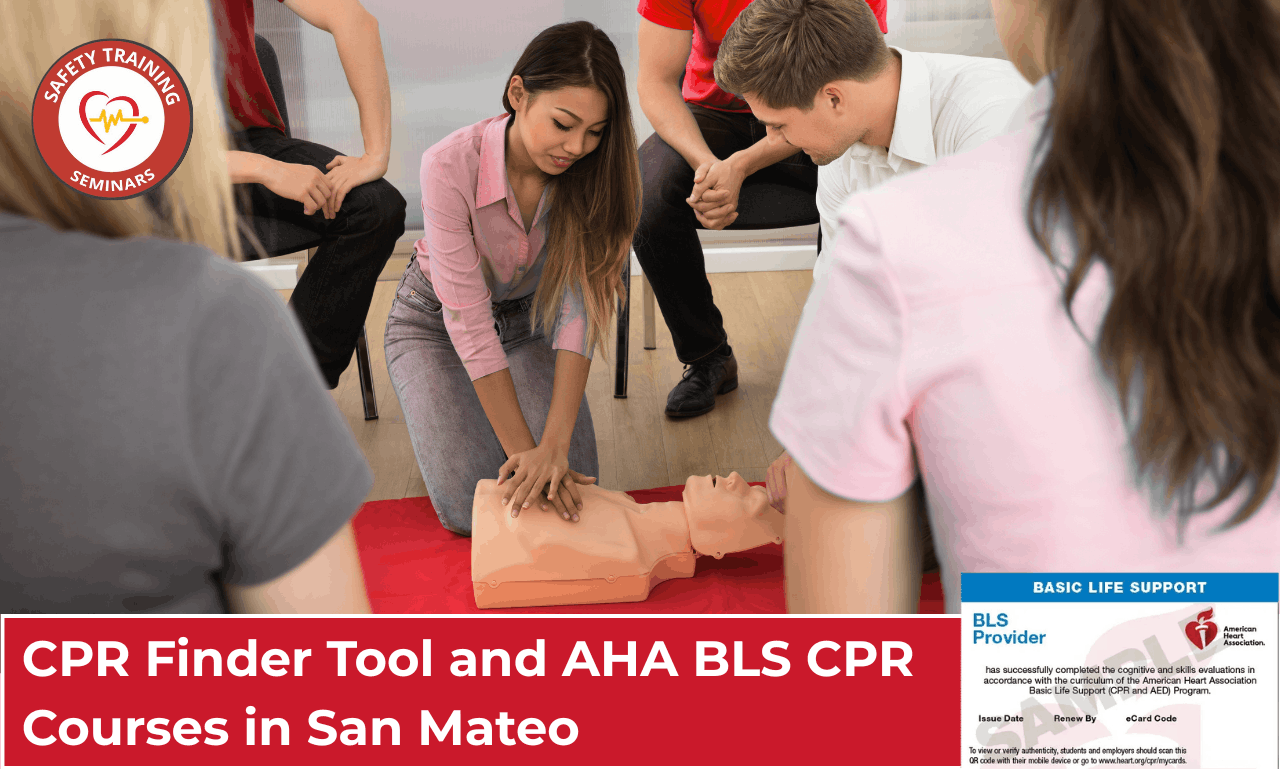
Yes. Upon finishing the online cognitive modules and passing the hands-on skills test, you receive an official American Heart Association BLS eCard. It is identical in status and employer acceptance to a card earned through a traditional classroom course.
How much time does the in-person skills session require?
Because theoretical knowledge is completed online, the hands-on skills verification takes approximately 30 to 45 minutes. The web portion varies between 1 and 4 hours depending on the course type (BLS, ACLS, or PALS).
What documentation must I present at my skills evaluation appointment?
You must present your printed or digital AHA online completion certificate to the testing instructor. Skills testing cannot take place without verifying that you have passed the required online cognitive modules.
Can professionals working in neighboring Peninsula cities complete testing at the San Mateo facility?
Yes. Individuals residing or working in surrounding communities—such as Foster City, Burlingame, Belmont, San Carlos, Millbrae, or Redwood City—can complete their online coursework independently and schedule their hands-on assessment at the San Mateo center.
Why do local employers reject CPR cards from web-only certification sites?
Employers and regulatory agencies require physical proof that a candidate can deliver effective compressions, operate an AED correctly, and provide proper ventilations. Unaccredited online-only courses do not include a physical evaluation, rendering them non-compliant under AHA standards and workplace guidelines.
Final Guidance for Course Enrollment
AHA Self-Guided Learning offers an efficient, dependable route to acquiring your life safety credentials without spending an entire day in a physical classroom. Combining independent digital study with a rapid practical evaluation helps you balance professional responsibilities while maintaining full compliance.
Before registering, confirm the exact course level required by your employer, academic institution, or licensing body. Once verified, complete your online cognitive modules independently and book your practical assessment at a local training center to secure your official AHA provider eCard.