Healthcare professionals, clinical students, and specialized responders in San Mateo face dynamic scheduling demands alongside strict compliance mandates. Securing a Basic Life Support (BLS) credential requires navigating specific provider requirements, understanding how blended learning formats operate, and finding a convenient local training site.
This guide outlines the essential steps for completing or renewing a BLS CPR certification course in San Mateo, clearing up common confusion regarding course types, hands-on testing, and regional compliance.
Key Takeaway: A BLS CPR certification course is designed specifically for healthcare personnel and public safety responders, emphasizing multi-rescuer care, AED use, and airway management. In San Mateo, completing a blended course—combining online coursework with an in-person skills session—allows clinicians and students to meet institutional requirements without sacrificing work-life flexibility.
What Is a BLS CPR Certification Course?
Basic Life Support (BLS) is the standard professional-level CPR credential required across hospitals, clinics, emergency services, and healthcare educational programs. Unlike standard CPR classes designed for lay responders, office workers, or childcare providers, BLS focuses on high-performance resuscitation techniques within clinical environments.
The curriculum covers a specific set of critical care protocols:
- High-Quality Chest Compressions: Performing chest compressions at proper depths and rates for adults, children, and infants to maximize coronary perfusion.
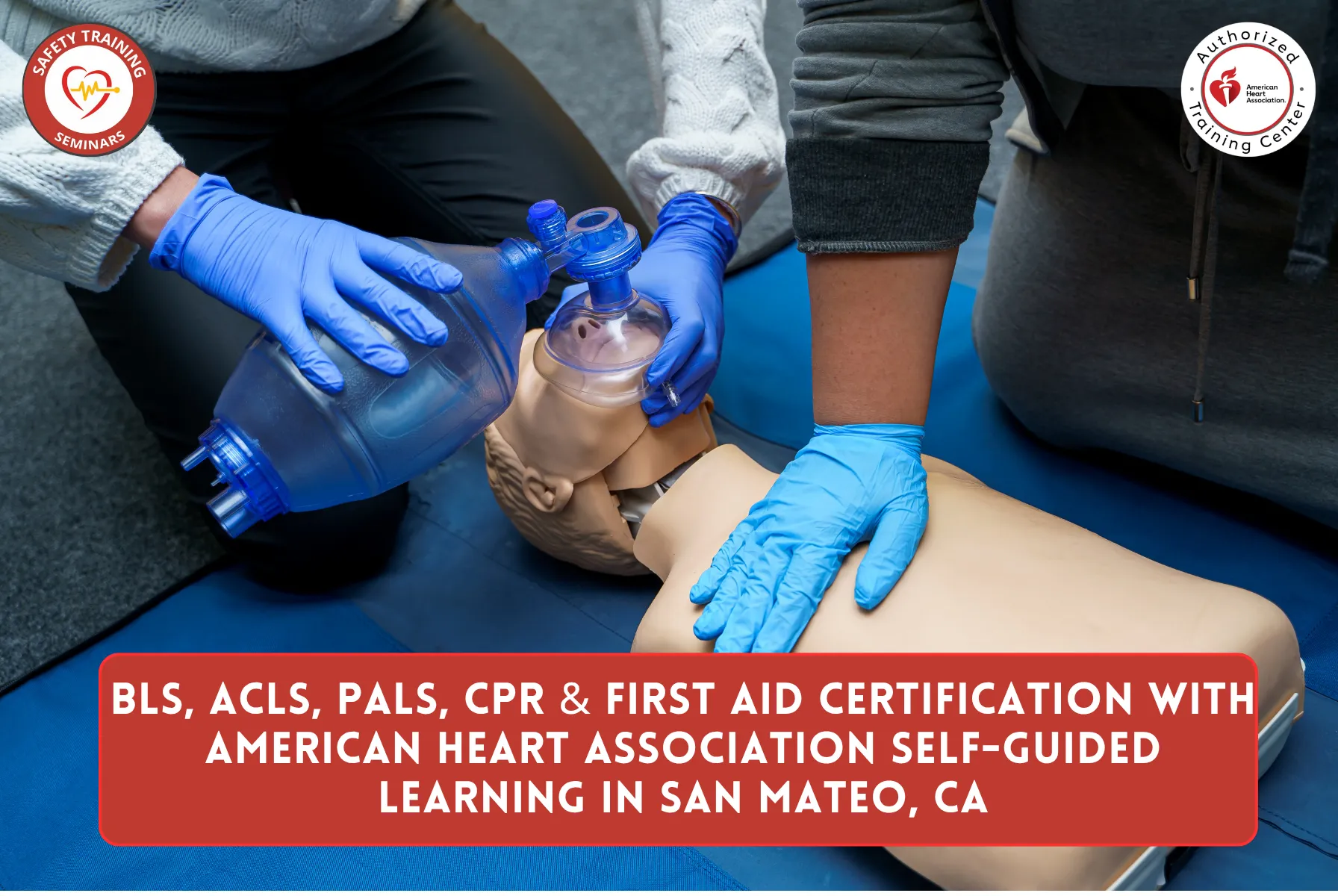
- Bag-Valve-Mask (BVM) Ventilation: Operating two-person bag-valve-mask devices to deliver effective positive-pressure ventilation.
- Automated External Defibrillator (AED) Integration: Rapidly attaching and operating AEDs during single-rescuer and multi-rescuer resuscitation events.
- Multi-Rescuer Team Dynamics: Coordinating roles efficiently within a healthcare team to minimize interruptions during CPR.
- Foreign-Body Airway Obstruction: Clearing severe airway obstructions in conscious and unconscious adult, pediatric, and infant patients.
Understanding these skill components ensures that participants arrive at training prepared for both the cognitive and hands-on portions of the class.
Who Needs BLS CPR Certification in San Mateo?
Hospital systems, ambulatory clinics, and academic institutions across San Mateo County maintain strict requirements regarding who must carry a valid BLS provider card. Most clinical roles require initial certification prior to clinical contact, followed by mandatory renewal every two years.
Employers usually specify the exact provider card required for employment or clinical privileges. Confirming these details with your supervisor, compliance officer, or academic program coordinator before enrolling prevents taking an incorrect course format.
In-Person vs. Blended Learning: Which Format Fits Your Schedule?
Modern healthcare schedules make attending a traditional four-hour classroom session challenging. Today, certification options balance time constraints with rigorous physical skill evaluations.
Traditional Classroom Training
In a traditional setting, students complete the video instruction, group practice, written examination, and physical skill assessments in a single, continuous classroom session. This format works well for individuals who prefer structured group discussions and immediate instructor feedback throughout every step of the curriculum.
Blended Learning (HeartCode® BLS)
Blended learning splits the course into two distinct phases. First, participants complete an interactive self-paced online module that covers the cognitive material, clinical scenarios, and written exam. Second, students attend a brief, focused in-person skills session to demonstrate physical mastery of compressions, ventilations, and team dynamics on feedback manikins.
For busy healthcare workers or students commuting along the Peninsula, blended learning offers flexible scheduling without compromising official compliance standards.
What to Expect During the In-Person Skills Verification
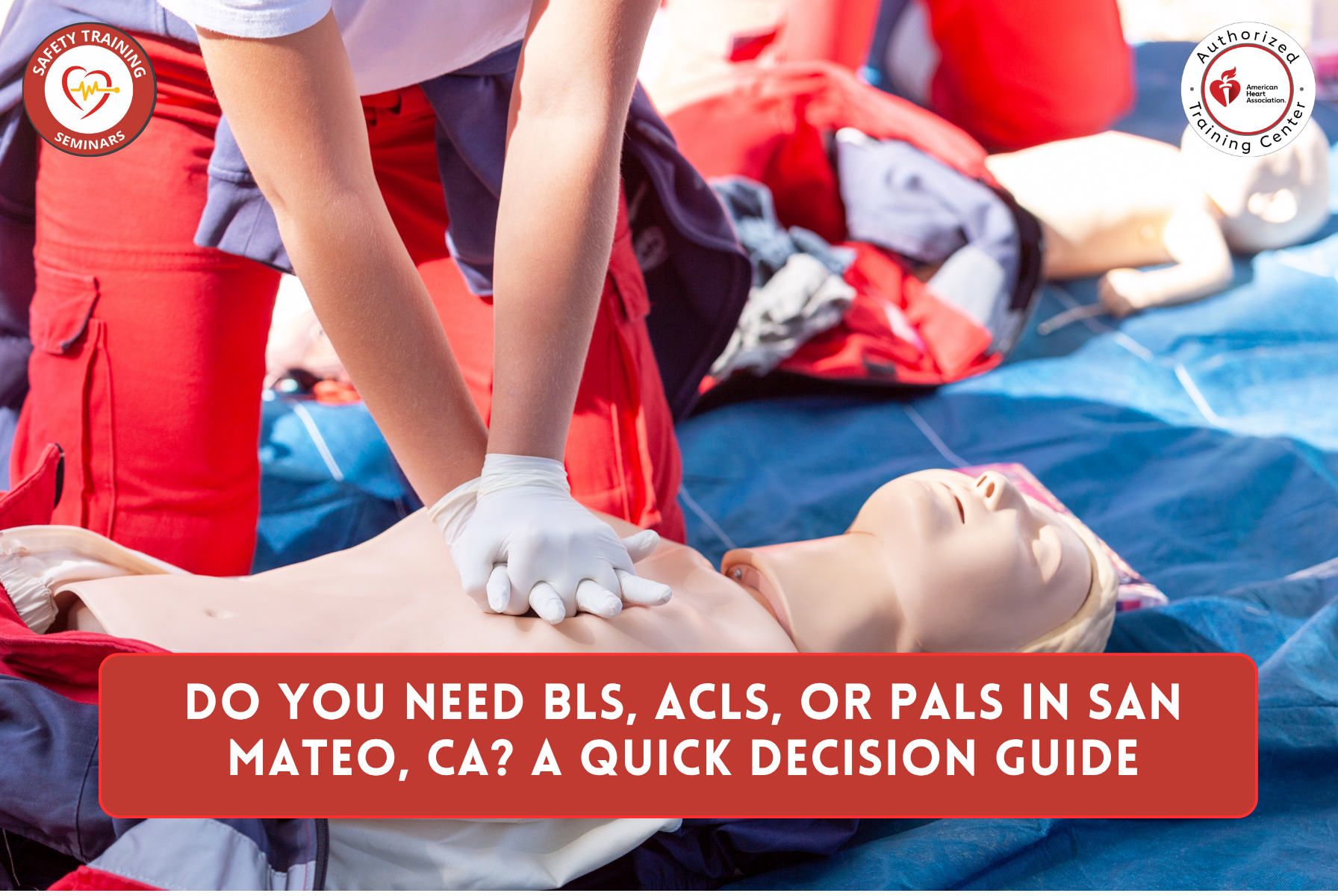
The practical assessment tests your physical ability to execute chest compressions and ventilations according to current resuscitation guidelines. Instructors evaluate individual technique using real-time feedback devices that measure compression rate, depth, and chest recoil.
During the hands-on session, expect to demonstrate:
- Adult CPR & AED: Single-rescuer chest compressions, pocket-mask ventilations, and immediate AED application.
- Two-Rescuer Teamwork: Coordinating compressions and BVM ventilations while minimizing hands-off time.
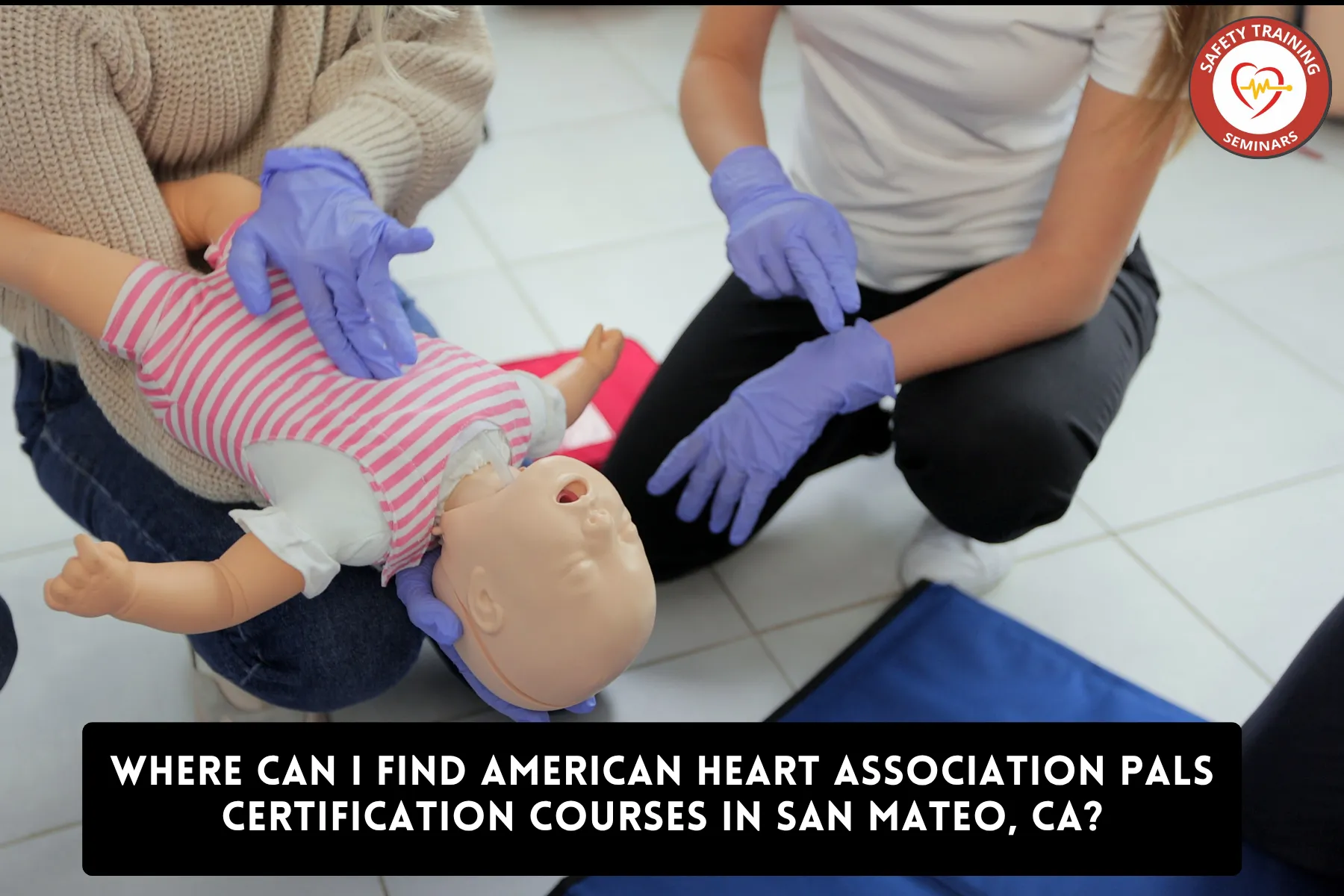
- Pediatric & Infant CPR: Correct finger/thumb positioning for infant compressions, proper depth control, and age-appropriate ventilation volumes.
- Airway Management: Position checks, head-tilt chin-lift maneuvers, and choking intervention techniques.
Arrive wearing comfortable clothing that permits kneeling on the floor and performing continuous chest compressions.
Local Healthcare Employers and Clinical Training Context in San Mateo
San Mateo serves as a central hub for medical services and healthcare education along the San Francisco Peninsula. Professionals working at local facilities—such as San Mateo Medical Center or nearby regional health systems—must keep their certifications continuous to maintain active credentialing.
Additionally, nursing and allied health students attending local institutions like San Mateo County community colleges or vocational medical programs must provide proof of an active BLS credential before starting clinical rotations.
Healthcare staff living or practicing in surrounding communities regularly seek convenient local training options. For instance, clinicians seeking Atherton, CA CPR and BLS courses or health workers comparing options near Belmont, CA BLS certification options rely on accessible Peninsula training sites to avoid lengthy cross-bay commutes.
Avoiding Common Certification Mistakes
Enrolling in the wrong training course causes unnecessary delays and added expenses. Keep these guidelines in mind when evaluating providers:
- Beware of “100% Online” BLS Claims: Standard healthcare compliance policies require a physical, in-person skill verification on feedback manikins. Purely online certificates without a hands-on evaluation are rarely accepted by hospitals or licensing boards.
- Verify Course Extensions Early: Most certifications remain valid for two years through the end of the issue month. Do not let your card expire; many facilities restrict clinical shifts if certification lapses.
- Match Course Titles Carefully: Ensure you enroll in a true professional BLS course rather than a general Lay Responder or CPR/First Aid course meant for non-healthcare personnel.
For specialized clinical teams requiring advanced resuscitation training alongside BLS, review details on burlingame-ca-cpr-bls-acls-pals-course to properly sequence certification steps.
BLS Certification at Safety Training Seminars San Mateo
Safety Training Seminars provides professional resuscitation training designed to meet local clinical and educational requirements across the Peninsula. The facility offers flexible schedules, direct hands-on testing, and immediate electronic card issuance upon successful completion.
Location and Accessibility
The training center is situated on Peninsula Avenue, providing straightforward access for healthcare providers practicing throughout San Mateo, Burlingame, and neighboring Peninsula areas.
- Address: Safety Training Seminars San Mateo CPR Training Center, 428 Peninsula Ave., Suite B, San Mateo, CA 94401
- Nearby Community Access: Serving medical professionals commuting from Daly City, East Palo Alto, and nearby northern communities reviewing Colma, CA BLS class options.
Participants can select from flexible morning, afternoon, and weekend time slots for blended skill sign-offs.
Frequently Asked Questions
Is an online-only BLS CPR certificate accepted by San Mateo healthcare employers?
No. Standard clinical employers, nursing schools, and medical licensing boards across San Mateo County require a hands-on skills assessment using feedback manikins. While the cognitive portion can be completed online through a blended format, an in-person skill verification remains mandatory.
How long is a BLS CPR certification valid?
A BLS CPR certification is valid for two years through the final day of the month in which it was issued. Healthcare providers should schedule a renewal course approximately 30 to 60 days before expiration to prevent any lapse in clinical privileges.
Can students from nearby Peninsula cities attend BLS classes in San Mateo?
Yes. Students and working professionals from nearby communities—including Daly City, East Palo Alto, and surrounding areas—frequently use the San Mateo location due to its central Peninsula placement and flexible skill-check schedules.
What should I bring to my in-person BLS skills check?
If you completed a blended learning course, bring a printed or digital copy of your online completion certificate. Wear comfortable attire suitable for kneeling on the floor to perform chest compressions.
Next Steps for San Mateo Healthcare Providers
Maintaining an active BLS CPR certification is a essential component of professional clinical practice in San Mateo. Whether you are entering a new nursing program, onboarding at a local medical center, or renewing an existing credential, selecting the correct course format ensures full compliance with your organization’s requirements.
Review your program guidelines, verify your expiration date, and check availability at the Safety Training Seminars San Mateo CPR Training Center to secure your preferred skill verification session.